Libby introduces bill to help homeless, foster children in Maine earn high school diplomas
AUGUSTA — Sen. Nate Libby, D-Lewiston, on Wednesday introduced a bill that would help more homeless youth and youth in foster care earn a high school diploma. The bill, LD 1916, “An Act To Increase High School Graduation Rates for Students Experiencing Homelessness or in Foster Care,” received a public hearing before the Education and Cultural Affairs Committee.
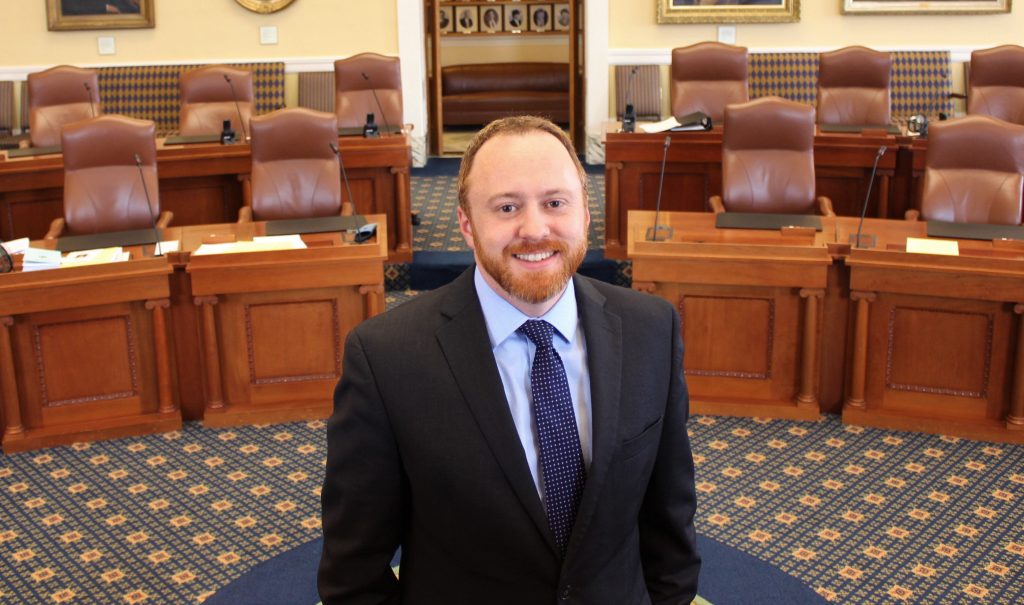
“This bill would provide critical support to some of our most vulnerable young Mainers,” said Sen. Libby. “There are so many kids in our state who need an extra hand finding stability. As our laws stand now, there are just too many unnecessary barriers in their way. As a state, we ought to be doing all we can to set these kids on a good path.”
LD 1916 would create new pathways for at-risk youth to obtain their high school diploma. The bill would require schools to support students who have experienced unstable housing that affected their education by helping them enroll in courses they most urgently need to graduate, and if necessary applying for a state diploma for the student, or aiding the student in this process.
Sen. Libby sponsored the bill after hearing from representatives of New Beginnings, an agency that helps provide services to homeless youth across Maine. Officials with New Beginnings cited multiple barriers that young Mainers will unstable housing face that their peers do not. According to data from the Maine Children’s Alliance, the overall graduation rate in Maine in 2018 was 86.8 percent. The graduation rate for homeless youth for the same year was only 57.7 percent, and the graduation rate for youth in foster care was only 56 percent.
“For the youth we serve, the idea that education is the pathway to a better life is more than ethos; it’s established fact,” said Allie Smith, who supervises the Education Support Program for New Beginnings, in testimony supporting the bill. “Youth who do not finish high school are 4 ½ times more likely to be homeless as adults. This makes lack of high school education attainment the single biggest risk factor for young adult homelessness.”
According to testimony regarding the bill, many students who experience homelessness, especially those who shift between different districts over the course of their high school career, often experience difficulty in meeting a school’s exact graduation requirements, even if they have met state graduation requirements.
Bicknell added that, “This small modification to existing law will open opportunities for post-secondary education, employment and lifelong achievement for Maine youth who, through no fault of their own, have been denied a high school diploma due to antiquated practices and red tape,” said Christ Bicknell with New Beginnings, in testimony supporting the bill.
According to recent reporting from the Portland Press Herald, in 2017, there were 1,458 unaccompanied homeless youth in Maine. The number of unaccompanied homeless youth in Maine increased 277 percent from 2014 to 2017. The overall number of homeless youth in Maine increased 30 percent over the same time period, from 1,934 to 2,515. According to other recent statistics, there are approximately 1,900 children in Maine living in foster care.
The Department of Education and the Maine Education Association also testified in support of the bill.
LD 1916 faces further committee action, as well as votes in the Maine Senate and House.
![Sen. Curry speaks at 29th annual Maine Firefighters Memorial [Transcript]](https://www.mainesenate.org/wp-content/uploads/2026/10/Maine-Firefighter-Memorial-150x150.jpg)